Wednesday, September 22, 2010

Weekly Deprogramming Schedule — #3


Masters of Horror: John McNaughton — "Haeckel's Tale" (2006, John McNaughton)

Originally earmarked for direction by Roger Corman, passed at some point to George Romero, the MoH first season finale ended up in the hands of John McNaughton. While I greatly enjoy the maniacal Wild Things, no disrespect intended, but McNaughton is not Corman or Romero. When "Haeckel's Tale" was broadcast it had been twenty years since McNaughton directed his only nominal horror film, Henry: Portrait of a Serial Killer. This is my sneaky way of suggesting that some of the "Masters" of Horror are not masters, or maybe not even specialists in horror, which may account for the general lack of mastery on display. This is my kind way of saying that this promising premise resulted in a generally junky program.

Point in case, "Haeckel's Tale" is based on Clive Barker material, which ought to prime an audience for hideous transgressive visions, bizarre plot inventions or at least some weird gross-out shit. What transpires is an absurdly padded out buildup to a laugh-riot punchline that maybe is/probably isn't supposed to be funny, which is that a 19th century country lady has a sex orgy with zombies. Everything is wrong here: go-nowhere reference to historical figure Ernst Haeckel, telegraphed twists, pointless sidetracks exploring God's Domain vs. science vs. Frankensteins vs. necromancy, circular conversations repeated over and over, and poor Jon Polito wearing a long gray wig. The self-negating frame story, for instance, sees an old lady telling a cautionary tale about why not to raise the dead, when the twist reveals that she gets it on with revenants all the time. In one of those special moments where nails are struck squarely on the head, a zombie dog pops out of a trunk and wriggles around in sub-par special effect fashion but our skeptical protagonist scoffs "it's some kind of crude puppetry!"

On a more important note, "Haeckel's Tale" was scored by avant-garde music heroes The Residents, whose work was then rejected and replaced. This previously unreleased material is currently available for a pittance at the group's newly mounted download store. As the Rez say, Buy or Die!

* * * * *

Masters of Horror: Tobe Hooper — "The Damned Thing" (2006, Tobe Hooper)

What this amiable mess seems to have borrowed from Ambrose Bierce is a title and the image of a man killed by an invisible creature. Basically the deal here is that an unseen horror of some kind stalks Cloverdale, Texas, but is mainly after poor Sheriff Reddle, whose family was wiped out in an attack 25 years prior. "The Damned Thing" tries out and swipes a dozen different ideas, and may be amusing or effective in the moment but the whole thing just doesn't track. It's got a small community devolving into a mob of crazies (like The Crazies, sure, or "The Monsters are Due on Maple Street"), a small town in denial until its sins come to roost in supernatural form (like Stephen King in It, 'Salem's Lot, Cujo, etc.-forever mode), nuclear family meltdown as psycho dads hunt the wife and kids (an extended Shining swipe), a horror passed through generations of the same family (like, er, Jaws the Revenge, maybe), and a sub-Smog Monster not-quite-environmental-parable about tampering with the mysteries of nature (SPOILER it's a giant oil monster that wants to eat the Reddle family because they built an oil rig). Sometimes the monster is invisible, sometimes not, sometimes its presence drives people to aggressive violence, sometimes not, and the story sorta makes sense but really does not.

As an addition to the Hooper legacy "The Damned Thing" is obviously minor work, less ambitious but less botched than "Dance of the Dead", and not as much fun as The Mangler. The episode's most effective sequence in terms of plain, wincing horror and oh-goddamn! surprise is of a man attacking himself in the face with a claw hammer. Clearly this Tobe Hooper has a talent for horror about the misuse of hand-held woodworking tools, and that skill ought to be channelled into something of more consequence than "The Damned Thing".

* * * * *

The Garbage Pail Kids Movie (1987, Rod Amateau)

Every time one sits through this treasure trove of appalling images, something new will bother the edges of the mind and haunt the viewer well into slumber. Perhaps it will be gutter punk fashionista Tangerine spreading her pantyhose'd crotch in order to entice 14-year-old Dodger into allowing her to exploit his home-sewn garments (don't worry, she's fifteen, herself... or maybe do worry). Perhaps it will be the never-again-referenced title sequence that may or may not imply the Garbage Pail Kids are extraterrestrial beings. If you haven't seen The GPK Movie — or, rather, Experienced it —, it is the dingiest-looking, most unpleasant children's movie ever made and is about how the a bunch of toddling dwarfs in walleyed rubber baby masks puke, snot, fart and piss all over and help a little boy try to score with a gang leader's girlfriend by using their magical sewing skills.

Like I said, something new every time. This go-round it was a little girl sneering "Go suck a rope!" at the men from the State Home for the Ugly who have caught her in a butterfly net. The image of the pummeled Dodger doused with raw sewage by bullies is enhanced when one remembers he is covered with open wounds. A newly discovered puzzling detail: a painting from fellow fucked-up family classic Troll (1986) is prominently featured on the stairs to the antique shop basement where the GPKs are held captive. The overlapping staff between productions does not seem to include the art directors or property masters, but the films do share the same special effects crew and Charles Band's favorite thespian, Mr. Phil Fondacaro. Perhaps the Troll painting resides in the Fondacaro archives, or maybe like the Garbage Pail Kids driving off into the night on ATVs, some mysteries are like the wind.

Credit also to the lady of the house for noticing that among the cluttered set dressing a nude Cabbage Patch doll hanging by its neck in a rusty bird cage.

* * * * *

The Informers (2009, Gregor Jordan)

The Informers is set:
a) in Los Angeles, 1983.
b) in a world of people who can afford to sit around watching MTV on Eames furniture in their underwear, with some sidetracks to a fanciful vision of how not-rich people live (selling abducted children to rich people).
c) deep inside Bret Easton Ellis' stalled-out brain.
d) who cares? It's over. It doesn't matter. Like... it doesn't matter.

The fourth screen adaptation of Bret Easton Ellis is apparently the writer's least favorite — he's even gotten soft on Less Than Zero — because it "doesn't work," as he told Movieline and more helpfully lodged the complaint that "it’s not supposed to be played like an Australian soap opera" and that his own vision for the project was funnier. Not being versed in Australian soap opera, I can only say that the tone is perfectly appropriate for an Ellis adaptation, that being suitably zoned out portraits of wastoids punctuated by hysterical potboiler speeches, fights and meltdowns, and shrill moralizing throughout. To be fair, Ellis can sometimes be actually funny — my favorite moments are Patrick Bateman hallucinating a television interview with a Cheerio in American Psycho, and a possessed Furby emerging from a dog's butt in the bonkers Lunar Park. He usually settles for Warholian jokes funnier to talk about than to experience, such as endless lists of characters' designer consumables, celebrity names, sex acts and drugs.

All four Ellis adaptations offer valid, committed takes on the material, all emphasize and capture different aspects, but all are sincerely Ellis-ian. The Informers specifically nails Ellis' cold, sheeny prose, affectless characters, leaden, portentous symbolism in every prop, backdrop and air-sucking line of choked dialogue. Gregor Jordan's film is mostly shot in that too-bright gray of overcast L.A. and his chilly liquid camera moves like it's been resting in an ice bath. Lots of shots of people staring off and thinking/not thinking.

The Informers retains the book's interconnected short story structure but cuts between story threads, in the tapestry narrative tradition of Nashville and Short Cuts, rather than the anthology tradition of Fantasia or Dr. Terror's House of Horrors. Also unlike any of those movies, the hoard of characters are all creepy disaffected idiots and nothing particularly happens in any of their stories. For example the rock singer for the titular band, The Informers, sits around a hotel, ingests substances, cuts his hand, sexes underage groupies, doesn't sign a movie deal, makes a phone call and finally punches a groupie. While magnolia is built of a dozen small stories packed with incident, intricate overlap and convergence, and Crash (2004) has a certain thematic unity and its interwoven sprawl is part of its purpose, The Informers is glued together with persistent drone, its characters largely linked because everyone is passing around the HIV virus, and its theme that everyone is an amoral shitbag trapped in stasis. I'm gonna go ahead and say I think it is surprising and questionable that a gay man who lived through the era would write a satire about the early '80s in which one of the blackly comic jokes is that the whole cast is spreading AIDS to each other, then complain that he wanted the movie to be more "light-hearted." Or it would be surprising if the same guy hadn't written a book with a severed head on a boner, then complained that critics missed the satire.

The magnetic cast gives all kinds of alienated, glassy-eyed and ridiculous, and there are some killer scenes built around very fun performances. Mickey Rourke abducts a child in broad daylight by scooping the boy up and chucking him in a van, and it looks like documentary footage of what Mickey Rourke happened to be doing on his way to set. Billy Bob Thornton as a sociopathic movie studio head corners his mistress, Winona Ryder, in the Spago ladies room. She keeps trying to break up with him and he just smiles calmly and doesn't listen, and she bugs her eyes out, sputters and just can't fuckin' believe his gall. Another diverting Ryder scene sees the nicotine-fitting news anchor harassed by a sniggering rock band during lunch at Canter's deli; it's a sharp and specific confrontation as privileged L.A. square culture and snotty hipsterdom look each other up and down. Stealing the whole mess is Chris Isaak, looking very much like Kurt Russell and playing a terminally dorky dad trying to bond with his bratty, resentful son on a Hawaiian vacation. Again, nothing really happens in any of these stories and that's sort of the point, so in a way these amusing performances are working against the spirit of the material.

If you have read the novel, be warned that all the vampire parts have been removed which makes the film less silly and entertaining. If you have not read the novel, unlike the movie, it has vampires in it, which makes the book stupider but less vague about why kidnapping victims are being sold to Hollywood creepos. Jury is out on whether it is weirder to adapt a vampire book and cut out the vampires, or that vampires could be inserted or removed from a story with no appreciable damage.

* * * * *

Project Runway — "A Rough Day on the Runway" (Season 8, Episode 8; Lifetime)

Jacqueline Kennedy Onassis was many things, but "fashion risk taker" is not one of them. A style icon, sure, but in my humble, wearing Dior is not risky. And that's fine, because fashion inspirations from Audrey Hepburn to Tim Gunn may be timeless and memorable without any particular edge. But contestants, advisors and judges alike seem confused by exactly what Jackie's style consisted of, what it meant, and the idea of this week's nebulously-worded challenge. See, T-Gunn stands in front of a big collage of Jackie snapshots and tells the kids that he is "honored" to be in the presence of... 40 year old photographs? Yes. Then explains that Jackie is to be their muse for this challenge.

There are lots of ways to interpret this, but I would have/did assume it meant something like "draw inspiration from and update a classic Jackie look of your choice." The designers largely seem to think this means "what would Jackie wear in 2010?" But, er, no, because she'd be 81, people. She would have Casanova make her clothes. The real point of all this is that they want the designers to make American sportswear with some kind — any kind — of '60s inspiration. To reinforce this, January Jones of the Adventures of the Mad Men teleprogramme is in attendance as a charisma-free Stylish Actress guest judge. See, slight retro-styling and mid-century references are the rage right now due partly to that very AMC show, which is why there are posters about it in Banana Republic windows as we speak. ANYWAY, nobody picks up the hints except Mondo and Michael Drummond. In the end one is de vinna uf dis challench and one is gone, daddy, gone.

I'm gonna go out on a limb here and say that Mondo Guerra knows his 20th Century fashion miscellanea rather well, as when asked why he is wearing eyeliner, suspenders with tiny shorts and knee socks he says his look was "inspired by The Cotton Club." Which, 1) holy shit, dude, and 2) oh, right on. Point is, young master Guerra's major reference points already seem to be '80s Trapper Keeper covers and '60s sportswear fashion, and he knows how Jackie Kennedy dressed. When the judges coo that he was somehow able maintain his own design identity in the winning ensemble, well, uh, no doy. He'd seen Jackie wear bold colored suits and houndstooth (presidential campaign, check the books!), and seen her casual and in striped tees post-Camelot, split the difference and tossed on Jackie O sunglasses like a goddamn maraschino cherry.

Every other designer just didn't listen or didn't get it or sucks, maybe? No hats, no bold, bright colors, no A-frame dresses, no long gloves, no immaculate styling. And maybe fine, there's not time to make a Kennedy-style suit, but there's time to properly sew an Onassis-style yachting outfit.

Gretchen is not called out on obsessively making the same camel colored Jedi robes that sank her team in the group challenge, but there are more important matters to attend to. Namely, Andy South not only doesn't listen to the "Jackie Kennedy Onassis" part but ignores the "sportswear" tip and disregards "properly tailoring any and every piece." Popular sport-making aside, these are not proper harem pants, but... eh, close enough that with the sorry little vest, Mr. South's model appeared to be costumed as Toad from Super Mario Bros. The judges laugh openly at this clothing which has been custom made for colorful derisive metaphor, but the most tragical, sad thing is that Andy was essentially dressing his model like himself.

Now, whatever else one wants to say about Michael Drummond's lazy-ass bag top and skirt consisting of nothing but pleats, it ought to be pointed out that he made a perfect little wool jacket that was the very picture of vintage Jackie Kennedy. He is made to be Out, possibly because of all the deep V neck T-shirt wearers, his are the deepest and, therefore, grossest. Goodbye, Mike D. You are still my second favorite Beastie Boy!

Thursday, September 16, 2010

What Plan Will You Follow Now, Cyclops?


The Goal: Locate a suitable planet for colonization, colonize it, enjoy life in the new colony, and so on.

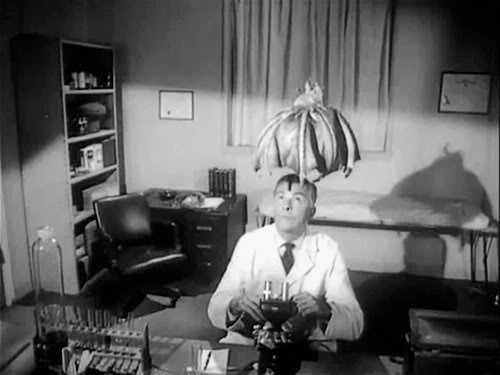
The Plan: 1. Have a bitchin' flying saucer that also goes underwater.

2. Use it to visit hundreds of worlds apparently at random, until stumbling upon Earth. Observe, evaluate for habitability and resistance capabilities of native population, etc.

3. Periodically recharge magnetic power at the North Pole, because the saucer runs on magnet power.

Supplementary Tasks: Kidnap Earth people as specimens to take back to home planet. Their body structures will be studied for potentially useful adaptations to immediately copy via genetic engineering, like evolutionary CliffsNotes.

Contingency Plan: Blow up any and every submarine that tries to get near the North Pole. If anyone manages to invade the ship, melt them with rays. Failing rays, chop them in half with automatic doors. [NOTE FOR FUTURE EXPEDITIONS: Do not allow an Earth man with a flare gun anywhere near the saucer captain's massive, undefended gelatinous eyeball. Though it can regenerate, this hurts like a bastard.]

Is the Plan Sound?: Not too shabby, but not particularly colorful. A big speech about how specimens are being collected seems at direct odds with the primary observed behavior of destroying everything in the saucer's path.

Thursday, September 09, 2010

What Plan Will You Follow Now, Davanna?


The Goal: Locate a viable source of blood for the dying race of Davannans, whose bodies are ravaged by radiation bombardment from ongoing nuclear war.

The Plan: Several phases outlined in detail, but it boils down to:
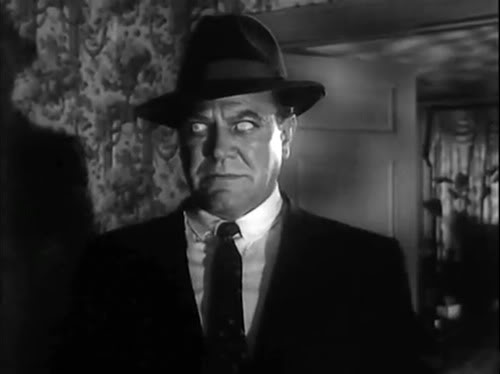
1. Dispatch a representative from Davanna to Earth. Disguise him as a rich weirdo called Paul Johnson, and cover his milky white eyes with sunglasses 24/7. Employ juvenile delinquent manservant for menial tasks like operation of Earth vehicles and guarding the corpse-burning oven.

2. Force Earth doctors to provide blood transfusions without explaining why. Employ live-in nurse for daily home transfusions.

2a. If Earthling blood proves a compatible replacement, enslave the planet and steal all the human blood. Skip to #3.

2b. If Mr. Johnson dies, destroy the planet.

3. When the blood is used up, destroy the planet.

Supplementary Tasks: Procure extra blood samples from winos and vacuum cleaner salesman Dick Miller by means of a blood-sucking briefcase. Probably these are for study, but store them in the fridge. Also, accidentally smush a hapless Asian-American fellow to death in the interstellar matter transporter while attempting to mail him home as a "sub-human specimen."

Contingency Plan: Mind-control, telepathic linking ability and eye-contact-activated ocular death ray should cover most emergency situations. Should worst come to worst, dispatch flying bat-octopus-umbrella minion that can eat peoples' heads. [NOTE: When not in use, Vampire Umbrella Bat should be wadded up to look like a celery and stored in cellophane.]

Is the Plan Sound?: The blood procuring scam is okay for a last ditch effort. "Species facing extinction" angle adds sympathy, but that is mooted by overt racism and intent to destroy the planet without motivation.

This is the way the world ends.

Thursday, September 02, 2010

Are You a Righteous Man, Agent Mulder?


In the lifelong project of staring too hard at arbitrary scenes from The X-Files, here's an installment of a thing. The episode "Signs and Wonders" (7ABX09) was likely built around a moment exploiting the universal observation that staple removers look like little snake heads. So mid-episode there is a creepy-comic match cut to that effect, later undone in the same scene as the office supply transforms into a dodgy CGI serpent. The topic de MOTW jour is the X-Files favorite of Weird Religious Cults, specifically Pentecostal snake handling. If you are of a mindset that finds it offensive to refer to such rituals as cult activity, I gently steer you away from "Signs and Wonders".

The snake handling element, of course, also provides the thrum of primal fear underlying all good X-Files, and not a few lesser X-Files. Namely it gives an excuse to have a bunch of snakes all over the damn place, including a showstopper in which a squirmy knot of rattlers issues forth from a pregnant girl's uterus. Enough people are reflexively afraid of snakes that they often top lists of common phobias, but I confess that I must belong to the target audience for Richard Avedon's Nastassja Kinski poster, because the Serpentes don't ick me out at all.

Right then, to the heart of the matter. The episode is a battle for souls between The Church of God with Signs and Wonders (the snake handlers), run by Rev. Enoch O'Connor, and the Blessing Community Church, tended by Rev. Samuel Mackey (denomination not specified, but non-snake-handling). A fine springboard for Topicals and Discussions, because, as always, when an X-File is opened on religion, trouble comes running. In what I note as a sequence of some Excellence in Network Snake-Thriller Television, the ideological and worship practices of the two churches are compared and contrasted as the clergymen each give their congregations a load of Revelation 3:16. "Signs and Wonders" is, indeed, a little more nuanced than snake handlers vs. no snakes.

We join O'Connor mid-preach, and yes, there are snakes, and yes, speaking in tongues, hollering and flailing. An elegant pan right, and a cut concealed by an out-of-focus bald head in the foreground aaaand... we join Mackey at in a Bible study discussion group. O'Connor's congregation is being preached at, whipped up to a fine froth, made "hot," in O'Connor's terms. Mackey sits in a chair, in a circle with his congregation, and works with them on a textual and historical analysis of the passage. Here's what these fellows have to tell you:

O'Connor: Revelations [sic] 3, the sixteenth verse. "Tis better to be hot or cold than lukewarm." God says if you're lukewarm, He will vomit you outta his mouth! Yes, did you hear what I said? God hates the lukewarm!

Mackey: "So, because you are lukewarm I am about to spit you out of my mouth." Now, that could sound pretty harsh, couldn't it? I mean, depending on how one reads it. But if we put this verse in a historical context I think we'll see [and here the dialogue fades to the sonic background] that John was specifically addressing the problems of the Church at Laodicea.

Mackey reads straight from his Bible, which sounds like a close-enough-for-FOX edit of NIV/NRSV language (he drops the appositive "neither hot nor cold"). O'Connor is holding an open book and points to the page, but is orating from memory and improvising. To be up-front about this, I know little about the scriptural interpretations and religious philosophy of real life snake handlers. My understanding is that these folks would probably be King James Version devotees, and there the key word in the passage is "spew" (well "spue"). Since I only keep an NRSV and KJV in the house, I'll trust to the reliable ol' Online Parallel Bible, which assures me that lots of weirdo translations have Christ threatening to vomit. I'm unable to locate any translation that formulates the passage in the quoted manner, as instruction rather than explanation. In an interesting detail, O'Connor's book is open to a page about a third of the way in. Revelation, being the twist ending, is usually at the back of the Good Book. Among the possibilities are that O'Connor is performing, and the book is a prop more than a prompt, or that he is using some volume of eschatological literature that happens to have Revelation in the first third. This esoterica is not the point of the sequence. The point is in the style of the lectures and the language, key words still being vomit vs. spit, hot vs. lukewarm. O'Connor is preaching judgment and wrath. Both men are engaged in the act of interpretation. Though the word sets fundamentalist teeth on edge, to engage any text is to interpret it. Everyone being good postmodernists around here, I trust the concept goes down easy. Mackey's interpretation begins from a place that acknowledges human reluctance and fear, tries to assuage doubt, and aid his congregation in accepting the message. To ease into the confrontational passage he begins outlining the "historical context" of the statement to the Laodiceans (which it is). O'Connor's interpretation is that the passage is a challenge to contemporary Christians of any era (which it also is) and a blow not to be softened. True to their own slightly revised takes on the verse, Mackey explains, O'Connor instructs.

All this sets an audience up to side with Mackey, who gives community to the lost, speaks and practices non-judgement, and to mistrust O'Connor, all pop-eyes and spittle (and snakes!). The stinger, of course, is that it turns out Rev. Mackey is the Devil.

After that revelation, the parallel church services are even more interesting. Consider Mr. Mulder's late-game description of the Devil as "some kindly man that tells you what you want to hear." One of the preachers in the town of Blessing is decidedly hot, spewing barf and brimstone, while the other is easing into a lukewarm bath. But uh-oh, is "Signs and Wonders" really taking a conservative Christian point of view?

Well, yes, no and maybe.

Figuring The X-Files's internal logic as regards theological matters is thorny, and evaluating the show's attitude toward the same is even harder. We've got several Troubles here. The X-Files sends the Agents chasing after weirdness of all conceivable stripe: folktales, urban legends, creature feature monsters, Fortean weather phenomena, and, yes, any number of world religious traditions, some extinct, many very much alive. Because it is a sf/horror/fantasy story, it tends to confirm the reality of every supernatural event, talent, entity, dimension. I regurgitate the premise of the program only to reinforce that within the rules of the 1013 'Verse, not only are there confirmed space aliens and leech-men, but a half-dozen warring species of space aliens, and a few breeds of leech-men. Various episodes confirm not only that X-Files World has a God, but several entire cultures' pantheons, and the Gods and adversaries of multiple, distinct Christian denominations. Point being, it is difficult to reconcile, say, "Kaddish" with "Revelations" with "Miracle Man", to pick three early explicitly Judeo-Christian deity themed episodes.

To which I say whew!, though I hardly wish to get into sorting out all that here. Possibilities for reconciliation of data:

(1) (boring!) The X-Files is a flawed text, built piecemeal episode by episode. I have mentioned this before, but the show has a respect for continuity only when it is necessary for the current story, and otherwise jettisons information as fast as it accumulates. By way of example, "Signs and Wonders" may be a Snake of the Week episode, but two episodes ago, in "Orison", Scully shot a man (possible demon and long-time Scully adversary Donnie Pfaster) to death, lied about the circumstances, and Mulder aided in covering up the transgression. At the time, this seems to shake Scully to her foundations. Next episode she's emotionally unscathed and investigating a wacky magician bank heist. Likewise, it means that no one ever sat down and charted the X-Files Index of Deities or discussed what episodes that confirm fringe Christian theology — snake handling, for example — "mean" vis-à-vis the Navajo spirituality or personifications of Death in other episodes. This does not have to undermine any critical analysis, but it might be kept in mind while forming a reading. Rather than work on supposition, we have to stick to what is on screen.

(2) The X-Files is radically pantheistic. Perhaps not as careful at that task as Buffy the Vampire Slayer or Neil Gaiman or Marvel comics, though, so I prefer explanation...

(3) The X-Files is radically agnostic. Individual episode seem to verify many belief systems, but once the rhetorical force of a given story has passed, the possibility is left open for other interpretations. e.g.— Scully may encounter a "Seraph" (actually a Cherub) in "All Souls", but all we can certify later is that... something happened. Scully thought it was an angel, and the episode seems to confirm, but certainly Something Happened.

That example brings us around to the heart of the matter, the Agents. The X-Files does so love to allow characters to discuss and monologue at length on life's meatiest topics — Faith, Truth, Society, Purpose and Et Cetera. Always pitched in grandiose Carter-ese, such dialogues are generally inconclusive, full of circular arguments, bullheaded perspectives and vagueness. The writing staff has a knack for characters with strong points of view talking past one another. The gold standard for this type of thing is Cigarette Smoking Man's conversation with Jeremiah Smith in "Talitha Cumi", an interrogation of the alien resistance fighter that reverses onto the captor. Anyhow, the soul under judgement in "Signs and Wonders" is Fox Mulder's.

For all the weight put to bear on the faith of Dana Scully, we actually know very little about her specific beliefs. She is theoretically a frequently-lapsed Catholic, and while investigating O'Connor's church, claims not to understand such extremism. But her private faith is of a fair weather variety, easily shaken when anything traumatic happens, and usually renewed by witnessing miracles and divine intervention — the sort of thing in which O'Connor specializes. Scully's spiritual flapability is a major topic from "Beyond the Sea" in the first season through I Want to Believe. She ought to understand the power of O'Connor's brand of religion, but does not. Mulder, however, gets it, and explains: "Clear-cut right and wrong, black and white, no shades of gray. You know, in a society where hard and fast rules are harder and harder to come by, I think some people would appreciate that. [...][S]omebody offering you all the answers could be a very powerful thing." That looks a little condescending in print, but there is none in Duchovny's delivery (though when trying to demystify the snake handling aspect, Mulder compares it to belief in transubstantiation, clearly to get Scully's goat). Mulder has a strong background in psychology, after all. This argument is the dark flip side to that slogan associated with Mulder's fringe science mania: I Want to Believe, indeed.

However foggy Scully's spiritual beliefs, we have some basic information. She believes in a God fairly aligned with Catholic theology and doctrine. Compared to that, we've got nothing on Mr. Mulder. Mulder's attitude toward organized religion varies from derisive to respectful, depending on the issue, and his personal relationship with the gods is an X factor. Most of the time it seems that Mulder is a foil to Scully's faith, either stubbornly agnostic or a wavering atheist, and mistrusts organized religion. So, well... what's up with that? I mean, doesn't this guy believe in everything, including skunk apes and vampires?

On the writer's room level, at the foundation of these characters, down where drama is hammered together, the concept goes that Mulder is the Believer, Scully the Skeptic. After some shading, this plays out in practice as something closer to: Mulder is obsessed and operates on intuition, and Scully is cautious and tries to uphold the scientific ideal. Up at street level, where characters walk around and breathe, these two aren't simple opposites, but compliment one another — he keeps her open-minded, she keeps him honest —, and have much in common — depleted personal lives, and mutual respect and eventual love, for starters. That Scully is a scientist and a Catholic is not a contradiction, but the kind of interesting tension that makes real people tick. Mulder believes in virtually everything supernatural except God for similar reasons. His ambivalence toward monotheism is partly because it might limit the scope of his other beliefs and provide explanations he finds too pat, but more importantly he rejects organized religion because a major part of his self-identity narrative is a romantic vision of the outcast crusader. His social circle consists of Scully, the Lone Gunmen, and a porn collection. An outcast in the FBI community, he integrates his bad reputation into his persona and first introduces himself as "The FBI's Least Wanted." Even UFO nuts have clubs and conventions, and Mulder may be an important figure to MUFON members, but he doesn't socialize with them. A loner to a fault, Mulder is as determinedly nonconformist as a G-man who wears a suit and tie every day can be. Lone wolves don't attend church picnics, end of story.

The idea of snake handling in "Signs and Wonders" and real life is, roughly, to demonstrate that the handler does not fear the Devil, and that God won't allow the destruction of the righteous by a rattlesnake. This test is involuntarily put to Agents Mulder and Scully. Mulder's test is administered by Mackey, who asks the million dollar question "are you a righteous man, Agent Mulder?" When faced with a host of phantasmagorial snakes, Mulder ends up fang-bitten, swollen and hospitalized. Now, maybe Mulder fails to pass muster because his moral rectitude is frequently questionable. Maybe because as pertains to the episode he's spent this investigation being fooled by Satan's subtle tongue and persecuting the true warrior of God (to be fair, O'Connor does break some serious laws, such as shoving Scully's face into a box of snakes). Maybe because, by New Testament Rules of Righteousness, he hasn't accepted Jesus. Maybe the test means nothing, since Mackey is the Devil. Maybe there weren't even any snakes in the room. But all we can say for sure is that Something Happened.

Nobody ever mentions it, and it happens in a flash, but when O'Connor holds Scully's head against the reptile cage, the snake does not lunge.

Wednesday, August 25, 2010

Satoshi Kon's Eternal Dream Parade

Satoshi Kon
1963 — 2010

When artists pass from this world, it speaks to the power of their work and demonstrates that they have infiltrated hearts and minds, if the audience hearing that sorrowful news reflexively filters it through the mental lens of that art. Which is to say:


This scene from Kon's OVA Perfect Blue (1998) was the first thought to flash through my head upon hearing of the August 24th death of the animator, director, and cartoonist. This is partly because of the literal content of the scene, in which tarnished pop star turned terrorized actress Mima has just discovered the demise of her entire aquarium of fish. But it is also because this has always struck me as a well-animated crying scene, and crying is notoriously difficult to animate. And all this because among Kon's four features as director, his first, Perfect Blue, remains my favorite. At first pass the unconventional psychothriller meditation on female identity and celebrity culture seemed joltingly Argento-esque, pro-critics tended to invoke Hitchcock and... don't forget we're talking about cartoons here. As soon as Millennium Actress (2001) appeared it was clear that what Perfect Blue is simply a Satoshi Kon film.

If there is one painful, unpronounceable word above, it is "four." Four features, one TV series, assorted animation tasks. Kon's death at 46 (nearly the same age as Whisper of the Heart director Yoshifumi Kondō) leaves us with a frustratingly small body of work. Frustrating not because it is inadequate, but because it is remarkable enough that one cannot help but want more. Every one of Kon's films is an increasingly ambitious technical and storytelling challenge. Satoshi Kon made films expansive of imagination and personal of preoccupation, pushed the boundaries of his medium and tried to break, dodge, and stand out from certain clichés, prejudices and lazy habits of the Japanese animation industry. It is that ambition to blow an audience's mind with sights they have not seen and will not forget that separates Kon's work, and, one hopes, will be the inspirational legacy of his films.

As I always feel lacking during such moments, I direct interested persons to this appreciation and 2003 interview by Brian Camp. The discussion mainly concerns Tokyo Godfathers, but manages to cover several key and under-examined aspects of Kon's films, such as the realer-than-truth documentary qualities possible in animation, and his dedication to visual depiction of Japanese characters that look Japanese.

Further reading at Midnight Eye, a pair of interviews regarding Perfect Blue and Millennium Actress and Paprika.

And so, still feeling lacking, I must allow the artist final say in these matters:

Tuesday, August 24, 2010

Never Knows Best

The elusive slogan glows in the dark blue night of the first episode of FLCL.


What does it mean? Or what does it mean to Mamimi who has presumably scrawled "NEVER KNOWS BEST" along the length of her cigarette, and burns the message down as she takes it into her chest? Does Never Knows Best even mean anything, in a series where the title itself is invented nonsense and the cast openly questions its definition?

Never Knows Best isn't even a proper sentence, is it?


It is instead, beyond meaning, perfect as the crowning contribution to the perfect moment. That moment is about being a disaffected 17-year-old standing in the middle of a bridge in the middle of the night, stalled halfway between noplace and notgoinganywhere. She pines for her never-seen, long gone baseball-playing ex, tries to replace the absent boyfriend with his 12-year-old brother, stray cats and strange new robot gods, and in this moment is just utterly convinced that she is lost and broken. The tobacco embers connect with and forecast Mamimi's eventual pyromania, and eventually, eventually maybe (maybe) she'll get over all this and be okay.


But in this moment there is one perfect, cryptic, bleak-sounding, moody adolescent thing to write on a rumpled cigarette.

It burns all the way down,
fire to air to water,
and
never knows best.

Ah! Sweet mystery of life!


Saturday, August 07, 2010

Let Them Talk! Let Them Scream!: THE PRIME TIME

Were one to construct a Sarris-on-42nd-Street style pantheon of exploitation filmmakers, it would be topped by those who created masterworks that live in museums and are protected by government agencies as national treasures, and laypeople who don't have the Sinister Cinema catalog delivered aren't aware that the movies ever played in proper fleapits and ozoners. So that's Romero, Hooper, Carpenter, Ulmer, Argento, Corman, Meyer. There would be a tier below that for geniusy craftsmen that play by the rules but slip in a lot of intentional art agenda, or deliver more goods than necessary, entertain above and beyond the call of duty, generally make something far more special than the poster art. That's your Fulci, Castle, Bartel, Sarno, Jack Hill, Larry Cohen, Rollin, Corbucci. These directors don't so much transcend the ghetto as create its definitive touchstones, exemplary examples. Then there might be Fascinating Weirdoes, and there most of us would list Milligan, Esper, Wishman, Findlays types. Can't live with 'em, can't believe what you're seeing. The bulk of the rest of the sea of candidates would be those with an identifiable style, thematic preoccupations, stable of collaborators — anything, really, that makes the filmmaker distinguishable from the house style of their producer, studio, or any anonymous journeyman or semi-competent. So: Adamson, Steckler, Mattei, Cimber, Castellari, Mikels, Bert I. Gordon, etc. forever.

Feel free to shuffle/add/remove names around until satisfied/bored/confused. This will surely become a popular party game on the order of bobbing for apples and Seven Minutes in Heaven, and lead to fistfights about what counts as an exploitation film, what nationalities should be included, and where to place Jess Franco. Now in such an imagined framework, certain of filmmakers, producers, and individual works are going to be singled out as Important Innovators. Beyond that acknowledgement the subject may or may not be examined or appreciated any further as film art. No guarantees. This happens in the above-ground world of major studio product as well, so for consideration: The Jazz Singer is something like a household name, and there is not a BFI Film Classics volume about The Jazz Singer.

Point being: Herschell Gordon Lewis.

Occasionally in this scum-glitz twilight realm, one bumps into a filmmaker who self identifies as an artist. They are rare among the carny types, jolly, cynical or both. By the accounts of their intrepid biographers, Andy Milligan and Edward Wood, Jr. are among that small number. Though they may have had few illusions about the nature and reputation of their work, these filmmakers at the bottom of the industry caste system, whatever else they may have been, understood that every picture-maker and story-teller is an artist.

Lewis has sometimes joked that his films are obviously well-made because the camera is always in focus.

Lewis' camera, of course, is not always in focus.


The hell?

Because Lewis and frequent producing partner David F. Friedman are world class showbiz raconteurs, and their landmark string of gore movies so pioneering, the films themselves are always overshadowed by their taboo-breaking legacy. The ten horror films account for less than one third of Lewis’ output (37 features), even when taking lost films into account (four known titles, supposedly upwards of dozens of shorts, loops and features). Among his horror pictures, approximately half of the very goriest titles dominate discussion of Lewis’ work. Which leaves us with an intriguing question: what is going on in the rest of Herschell Gordon Lewis’ movies?

The bulk of Lewis films are nudie cuties, a genre at which Friedman excelled. The balance of the filmography is filled out with hillbilly comedies, a biker movie, juvenile delinquent pictures, and oddball children's movies. All of these possess potential peculiar charms, but it is time to go hunting for the authorial stamp that marks them as H.G. Lewis films after the credits have vanished from the screen. Thankfully, all of Lewis' surviving work is available on home video, making it possible to evaluate his filmography beyond outstanding innovations in pulling out women's tongues.

Let’s take it from the top. Herschell Gordon Lewis' film career begins in 1959 with The Prime Time.


"Some kids grow up real slow. Me, I explode!"

Not content to hang around with her peers at Luigi's Italian Stereotype Restaurant, wild child Jean (Jo Ann LeCompte) screams at her mother, kisses Daddy goodbye and heads out into the day-for-night with clean-cut neighbor boy Tony (James Brooks). "Seventeen! I look at least twenty-two and I feel thirty!," kvetches the girl, burning with whattaya-got? rebellion (Friedman later quipped unkindly that "she was twenty-nine, and, on screen, looked forty-nine." To be fair, she's quite pretty and looks twenty-nine). The hot to trot gal is just toying with Tony's emotions for access to his wheels, and demands to borrow his convertible.

Meanwhile, Jean's nasty cop boyfriend Mack McKeen (Frank Roche) and his partner harass a pint-sized beatnik painter/ sex pervert known as "The Beard" (Ray Gronwold), who has been accused of molesting his underage models. Before leaving to make time with his own jailbait love interest, Mack extorts use of The Beard's studio as convenient location for his own romantic rendezvous. Alas, 'tis a date not to be kept. The Beard shows up to inform Jean that Mack has been called away on Police Business. Jean berates the hepcat's manhood, then commands that he paint her in the nude.

Poor Tony is bummed out about Jean's bad behavior, and mopes around Luigi's while his wacky pals spray bottles of Coke on each other. Even a late night underwear swimming party at the quarry can't cheer up Tony. His lovesick good girl friend Gloria tries to console him, but the situation worsens when Jean doesn't show up to return the car. Back at Chez Beard, the artist has gone berserk, tied up Jean, and painted her in a non-explicit pose unrelated to the way she's sitting. The wheels in motion, The Prime Time becomes a three-ring kidnapping drama as Tony and friends play teen detectives, Mack tries to throw the kids off the scent, and The Beard torments the captive Jean.

Two relationship triangles fuel the plot. The first is the questing knight/detective Tony torn between potential girlfriends, as light woman Gloria assists him in locating dark woman Jean. The second is free-spirit Jean turned object of desire and caught in the machinations of corrupt cop Mack and the crazed Beard. These figures of the Establishment and Counterculture respectively are both rotten abusers acting on self-interest, and it is great fun to watch the two creeps bicker.

The Prime of Jean: Sin, Suffer, Never Repent

Furious at the world, impatient at all times, and perpetually spitting venom, Jean is introduced posing in front of a mirror during the opening titles, and plays her first scene before another mirror. Jean is only interested in Jean, cannot see past herself, and sees others only in terms of what they can do for her or as objects of ridicule. Restless and dissatisfied, the self-absorbed girl desires constant movement and stimulation and nothing can scratch that unscratchable itch. Jean's quintessential scene may be as she waits for Mack at The Beard's studio, killing time by pacing incessantly, smoking and fuming. When she learns that her beau cannot keep the date, she is not upset because she cares about Mack, only indignant that she could be stood up, and in favor of the police chief no less! Doesn't the police force know who they're dealing with?

Sadly, the film's most compelling character is waylaid early in the story. Though we're stuck with the hopelessly square Tony for the second half, there are fun interludes with the sweaty Beard and his bitchy captive, and the trail to Jean is peppered with colorful exploitation elements. Tony's wiseass buddy Shorty beats up the owner of The Golden Goose bar where The Beard does live painting. A jumpin' rock combo plays "Teenage Tiger" (lyrics by Lewis, performed by "The Dodos"). A disreputable lady photographer tells an anecdote in flashback, in which Jean meets Mack during a dress-ripping, hair-pulling catfight. Finally, The Beard slips Jean a mickey and is about to stage her suicide and skip town, but blows himself up in a freak accident, slipping on a dropped match in his gas-filled apartment.

Beyond the rock n' roll, beatnik angle and semi-skinny dipping this is all fairly standard JD picture stuff (disregard any of several sources claiming it is any sort of nudie picture, cute or rough), but The Prime Time puts a plot development, trashy idea or weird, entertaining touch in every scene, and thus moves at a zippy pace. It may or may not be implied that The Beard sexually assaults Jean, and the film is a little more sexually charged than its contemporary cousins, but nowhere near as outrageous and seedy as Ed Wood, Jr.'s porn racket exposé The Sinister Urge of the following year, or crazy as his girl gang saga, The Violent Years (1956). Whether their morals are faux or no, wherever the finger is ultimately pointed, JD pictures are about the dangers facing a generation desperate to grow up too fast, but woefully ill-equipped to deal with their wild-for-kicks impulses. Some sophisticated entries in the cycle make social tragedies of this theme, as in Rebel Without a Cause and The Blackboard Jungle (both 1955), some, like the above examples from Wood, just gawk in fascination. The Prime Time is of the Wayward Girl subgenus, that is, it particularly focuses on the perils of adolescent female sexuality. Prurient and moralizing as it is, the film does not quite depict outgoing female sexuality as a destructive sin in and of itself, does not name VD, unwanted pregnancy, or ruined reputation as pitfalls, nor imply threat sexual activity is a gateway to drugs or violent crime. The danger in The Prime Time is that Jean's wonton behavior makes her bait for a society of wolves, and she is beset by controlling men who would possess and destroy her, and squares who would rescue, cleanse and change her. Jean cannot win, for the world cannot abide her as she is, nor she abide the world, and her ending has the fated feel of Lulu and Jack the Ripper's date with destiny at the end of Pandora's Box. Though Friedman recalls the movie having an "up-beat ending," it does not.

Cop vs. Beatnik: The Eternal Struggle

Directorial duties on The Prime Time were handled by Gordon Weisenborn, though the Internet Movie Database and various print sources erroneously credit Lewis as directing "as Gordon Weisenborn" (Lewis himself makes no such claim). Lewis would adopt transparent pseudonyms on future productions and coincidentally has a "Gordon" in common with the director, so it is unsurprising that direction is frequently ascribed to Lewis. The principle account of the making of The Prime Time is in David Friedman's autobiography A Youth in Babylon, which contains at least a few minor gaffes, but certainly establishes that Weisenborn was a real person. Conceding that Weisenborn was "a competent craftsman and a nice enough guy," Friedman pokes fun at Weisenborn's artistic ambition — "he thought he was making a film of great social significance" —, and rhetorically ponders why Lewis recruited Weisenborn instead of directing the picture himself. Friedman does offer the lead that Weisenborn's resumé consisted of work created under the Film Board of Canada. The National Film Board of Canada website lists two Weisenborn shorts in its archive: "When Asia Speaks" (1944, 19 m.) and "Tomorrow's Citizens" (1947, 11 m.), the first of which may be ordered on DVD.

The Academic Film Archive of North America website indicates that in the early 1950s Weisenborn worked frequently with Academy Award nominee John Barnes on projects like "Safety on the Playground", a railroad safety documentary called "Impact" and story films to accompany Dick and Jane reading primers. According to his AFANC autobio, Barnes was from Chicago, though he spent periods living and working in London, Rome and elsewhere. As Lewis was based in Chicago and The Prime Time was eventually shot in the area, it seems likely that Weisenborn had relocated to Illinois sometime after the war. The most intriguing Weisenborn/Barnes collaboration, "People Along the Mississippi" (1952, 21:39 m), is an educational short made for Encyclopedia Britannica films, and is readily viewable at Archive.org. A sweet and historically interesting parable of racial integration in America, "Mississippi" is more poetic and stylish than the average '50s classroom film. Weisenborn is named as a Chicago filmmaker by the Chicago Film Archives, which houses ten of his prints and an interneg (titles not listed online).

It is likely that Lewis had a strong hand in creative decisions, and Friedman owns up to having shot some pickups of the quarry swimming scene, which are frankly the worst looking, sloppiest section of the film. Comparison between the filmmakers is inevitable, but both Weisenborn and Lewis have their strengths.

This is thorny territory normally bypassed in this journal. Lewis has given enough talks and interviews to establish his preferred position on the topic of his artistry. Plainly, he presents himself as a savvy businessman, sometimes as a jovial, witty huckster, and no more; the stance being that he provides product of ample running time and audiences are sufficiently entertained so as not to request refunds. Point certainly taken, and the rough edges and semi-competence are thus chalked up to indifference and irrelevance. But that lack of attention to technique accumulates into a recognizable, peculiar style, integral to Lewis' appeal, and that is the partial cause and purpose of this exercise.


The Girl, the Bottle, and the Phone

Based on The Prime Time and his available short subjects, Weisenborn has a better grasp of traditional cinematic basics than evinced by his producers in their own directorial work, or at least more interest in and dedication to classic form. He has a strong compositional sense, frames shots and moves the camera to accommodate movement with greater accuracy. The Prime Time is not exactly dripping with style, but Weisenborn sometimes stages action on multiple planes and foregrounds important props a few times. As Jean contemplates answering a ringing phone, it looms in the fore, as do a pair of carnival prize wicker monkeys in her bedroom as Tony reminisces about the missing girl. There is not enough available work to determine what constitutes the Weisenbornian touch, but the tone throughout has a intensity of conviction that Lewis' work does not. That may not be to The Prime Time's benefit as memorable entertainment, but it makes it less weird than many pictures on its family tree.

The Beard: Adam Sorg, Take One

Weisenborn may be a more technically competent director than Lewis — even after thirty feature films — but the fingerprints of the producers are all over The Prime Time anyway. Like John Carpenter, Clint Eastwood, and Charlie Chaplin, Lewis sometimes scores his own work, and here he provides lyrics for the two slightly alien musical numbers. The plot only produces a pair of corpses, but they are created by an elaborate, unusual accident and murder, then posed in interesting tableau. The Beard is the first in Lewis' lineage of obsessed, murderous artists, which will carry through Adam Sorg of Color Me Blood Red (1965) and climax with the unforgettable Montag the Magnificent, The Wizard of Gore (1970). Delinquent behavior, the rock n' roll scene, sexually active teen girls, and the men who would exploit them are topics that Lewis would revisit in various combinations in Scum of the Earth (1963), Sin, Suffer and Repent (1965), The Girl, the Body, and the Pill (1967), Blast-Off Girls (1967), She-Devils on Wheels (1968), Alley Tramp (1968), and Just for the Hell of It (1968).

With all its historic firsts, The Prime Time has another claim to fame as Karen Black's screen debut. Indeed, in the finished product, the future Trilogy of Terror star can be glimpsed dancing at Luigi's and posing for The Beard at The Golden Goose. Friedman relates an anecdote that midway through shooting Black signed a manager and the company was paid $2,500 to destroy the nude footage of her appearance in the swimming scene. A far-fetched tale, perhaps, but the point is clear: Lewis and Friedman found a way to make money off their picture before it was even completed.

Tuesday, August 03, 2010

Frozen Smoke

Well lookit that, I've been tagged with the delightful Screencap Images Meme Thing by Things That Don't Suck. This being about images, I'll keep the notes brief.

The ever mutating, frequently ignored rules, for those what don't know:

1. Pick as many pictures as you want, but make them screencaps. These need to be moments that speak to you that perhaps haven't been represented as stills before.

This web-bogglin is dedicated to the practice of using screencaps, rather than posed publicity stills, as illustration, whenever discussing onscreen specifics like composition, set dressing, performance and et ceteras. I learned it from Bordwell and Thompson! [Housekeeping note to self: Seeing the finished product below reminds me that I ought to widen the post column to accomodate bigger images.]

2. Pick a theme, any theme.

Glenn Kenny's entry in this fad required players to guess the connecting theme between frames. As I am not so subtle and none too clever, the theme below is obvious at a glance. You may guess the films if you wish, titles at the bottom.

3. You MUST link to the original gallery at Checking On My Sausages and the gallery at The Dancing Image.

4. Tag five blogs.

Everyone reading this may consider themselves tagged... LAMF!
And now to the screencaps.


"A smoker's a smoker, when the chips are down..."

"... and your chips are down."

The films:

The Good, the Bad and the Ugly (Leone, 1966)
Night on Earth (Jarmusch, 1991)
Deep Red (Argento, 1975)
Hellboy (Del Toro, 2004)
Cemetery Man (Soavi, 1994)
The Shanghai Gesture (Sternberg, 1941)
The Prime Time (Weisenborn, 1959)
The Bride of Frankenstein (Whale, 1935)
The Matrix (Wachowski, 1999)
"No Smoking" (Kinney, 1951)
The Big Sleep (Hawks, 1946)
Wild at Heart (Lynch, 1990)
The X-Files — Fight the Future (Bowman, 1998)
Twin Peaks — Fire Walk With Me (Lynch, 1992)